
19 March 2026

Students in Naknek have joined the Fresh Eyes on Ice project in partnership with Alaska Peninsula and Becharof National Wildlife Refuges! Fresh Eyes on Ice researchers Sarah Clement and John Smelter recently joined the students, junior high/high school teacher Tate Gooden, and refuge staff Jaime Welfelt and Sarah Lang on their first data collecting outing in March 2026. This was our first school visit incorporating both science and art ice-related curricula, and we had a ton of fun!
John kicked off the visit with an ice art collage activity in Tate's afternoon art class. The students studied images of different stages of river ice - frazil ice, pancake ice, black ice, snow ice, rotten ice, ice jams, and more - and created images representing those different types of ice using paint and markers. Once the images were complete, the students cut up their images into different-sized pieces and rearranged them together on a larger canvas to play with representing water and ice moving through a river.
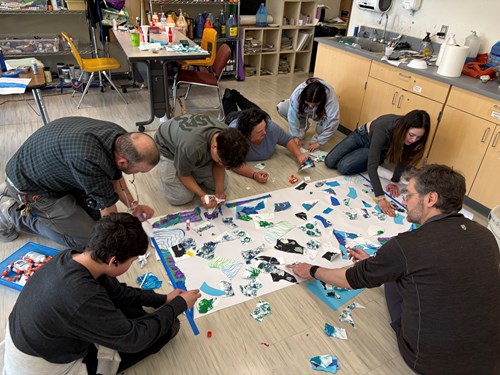
Ice art collage-making. Credit: Sarah Clement
After school, Tate took us out to a pond behind the school to test out the ice kit equipment and survey the monitoring site. We hit the ground drilling in three different spots across the pond and decided it wasn't a good fit. Tate heard through members of the community that another nearby lake, Pump Lake, was deep and likely wouldn't be frozen to the ground. We didn't have time to survey the lake that afternoon but made a plan to take the students there the following day.
Though the weather forecast called for highs of positive single digits, the wind was roaring with gusts up to 37 miles per hour in the morning. We gathered in the classroom to start the day with My Ice Stories and a brief introduction to the Fresh Eyes on Ice project with the junior high and high school students. Students and teachers told stories about ice fishing, variable ice conditions from year to year, and ice/snowball fights with friends. Several people referred to last winter (2024-2025) as "the year without winter," where they had very little ice and snow for the whole season. This year is markedly different, with above average snowpack and very thick ice on the ponds and on the river! One teacher told a story about crossing the ice bridge on the Naknek River from Naknek to South Naknek over spring break; one of the refuge staff later told us she wasn't sure she had ever heard of the ice bridge being fully put in during all the years she had lived in the community.
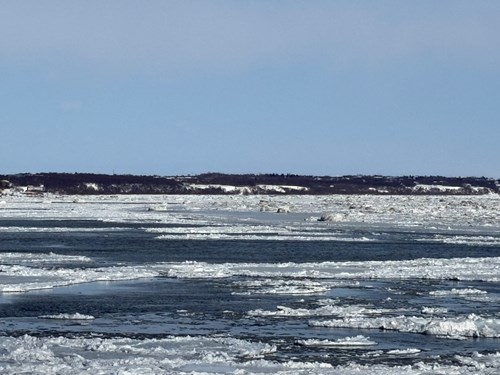
After school, Sarah and John explored the ice in town. They stopped at the port dock to take in the Naknek River ice near the mouth of the river. It appeared frozen with giant chunks of ice on the south side of the river, while there was open, flowing water with pancake ice floating down on the north side. Credit: Sarah Clement
Students suited up in their cold weather gear and made the trek out to Pump Lake with us, many hunched over (us included!) to push through the blowing wind. Before going outside, the students split into three groups to take measurements at three sites. Group 1 quickly got to work, and we tried to move efficiently to minimize our time outside. We did encounter several issues with the drill sticking in the ice, but the students successfully drilled three holes and completed their measurements. Thought it would have been fun to spend more time exploring the lake (including following some fox tracks!), the cold wind made us hasten back inside as quickly as possible.
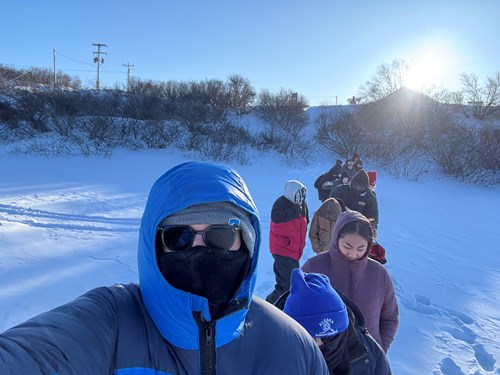
John and the students trekking out on Pump Lake to take their first set of measurements. Credit: John Smelter
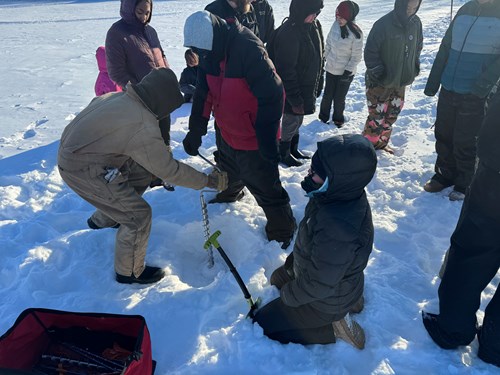
We only took a few pictures of collecting data on the lake because of the wind! Credit: John Smelter
That afternoon, we tested out a new-to-us ice-art activity: Gyotaku, or fish printing! Using smelts caught from under the ice just a few weeks before, John led Tate's art students in inking up the fish and laying special paper over the fish to create beautiful prints. The students also experimented with printing a salmon head, a rubber trout, and different types of leaves from classroom plants. Several students sent their art home with us to be included in our upcoming Science/Art show at the Morris Thompson Cultural and Visitors Center in April.
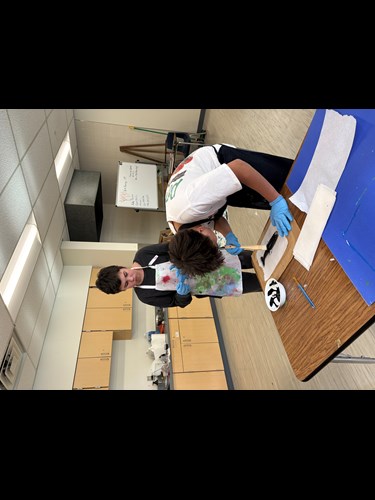
Gyotaku with the students. Credit: Sarah Clement
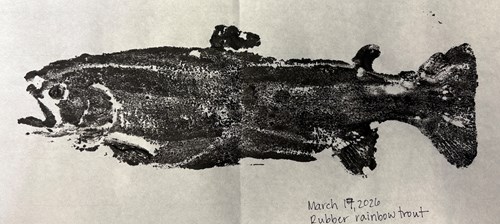
An example of a finished gyotaku. Credit: Sarah Clement
During our final morning in Naknek, the students explored how combining different types of images (on-the-ground photos, drone images, and satellite images) can help tell a more detailed story of what's going on with river and lake ice compared to just one type of image alone (see the lesson plan here!). They also learned how their data from Pump Lake is going to help the Fresh Eyes on Ice project - we watched a short slideshow of satellite imagery of the Naknek area from the past several years, which is some of the only information we have about ice in this area! The students' ice thickness data from Pump Lake and photos of the river and lakes will help tell the story of ice conditions in this part of Alaska. We're so excited to be working with Naknek students and the Alaska Peninsula and Becharof National Wildlife Refuges - we can't wait to see more of their data!